Daily liturgy
What Changes When We Look at the Cross
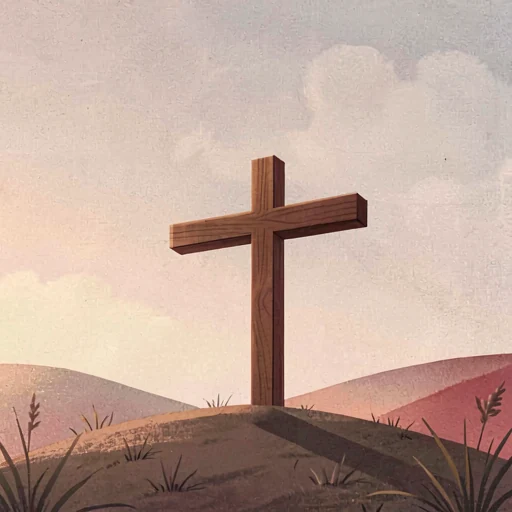
When impatience narrows our vision
The people in the wilderness do not begin with a carefully reasoned rejection of God. Their trouble first appears as impatience. The road feels too long, discomfort grows, and what once sustained them begins to seem worthless. Their words become harsher because their vision has become smaller. Only after the consequences of that restless spirit become undeniable do they recognize how far they have drifted. The sign raised before them does not erase the desert or pretend that the wounds are unreal. It asks them to look up from the place where they have been hurt. Faith often begins again in the same way. It does not require us to deny frustration, fear, or exhaustion. It asks us to notice how quickly those feelings can take control of our speech and judgment, and then to recover a wider view of what God is doing.
The One who is lifted up
Speaking with Nicodemus, Jesus recalls the sign in the wilderness and applies that movement of being lifted up to himself. From the outside, the cross appears to be a place of defeat, humiliation, and loss. Yet Jesus presents it as the place where God's saving love becomes visible. The purpose is not destruction but life. This changes how a Christian looks at the cross. We do not honor suffering for its own sake, nor do we pretend pain is good simply because it exists. We look at the cross because it reveals a love that does not abandon humanity when life becomes ugly, frightening, or unjust. What seems to be the lowest point becomes the place where divine love refuses to withdraw. The cross therefore does not teach us to seek pain. It teaches us where to look when pain tempts us to believe that love has disappeared.
One pause before we react
Impatience makes us fast: fast to complain, fast to judge, fast to speak as though the whole story were already clear. The cross interrupts that speed. It gives us a fixed point from which to reconsider what we are seeing. A difficult situation may remain difficult, but our response does not have to be ruled by the first surge of anger or discouragement. Today's practice is deliberately small. The next time irritation rises, pause once before speaking and ask whether the words you are about to use are coming from fear and impatience or from the kind of love revealed on the cross.
Source and readings
- First reading: 21,4ㄴ-9
- Gospel: 3,13-17
- Responsorial psalm: 시편 78(77),1-2.34-35.36-37.38(◎ 7ㄴ)
Check the official Daily Mass source
Source checked: 2026-08-11 05:49
This page provides Francisco Diary commentary and reading references, not the full liturgical text. Please confirm details with the official source before attending.
Today's Line
Leave one line for today
What is the one sentence that stayed with you today?
Recent lines under this reading
View collection- No lines yet. Be the first to leave one.
